


Spraying repellent insecticides makes an infestation worse because it triggers a biological survival mechanism known as budding. When these detect a toxic chemical barrier, the colony reacts to the threat by fracturing. Multiple queens and groups of worker ants quickly gather the brood (eggs and larvae) and scatter into deep, hidden wall voids to establish several new, independent colonies.
The Hidden Biology of Pharaoh Ants
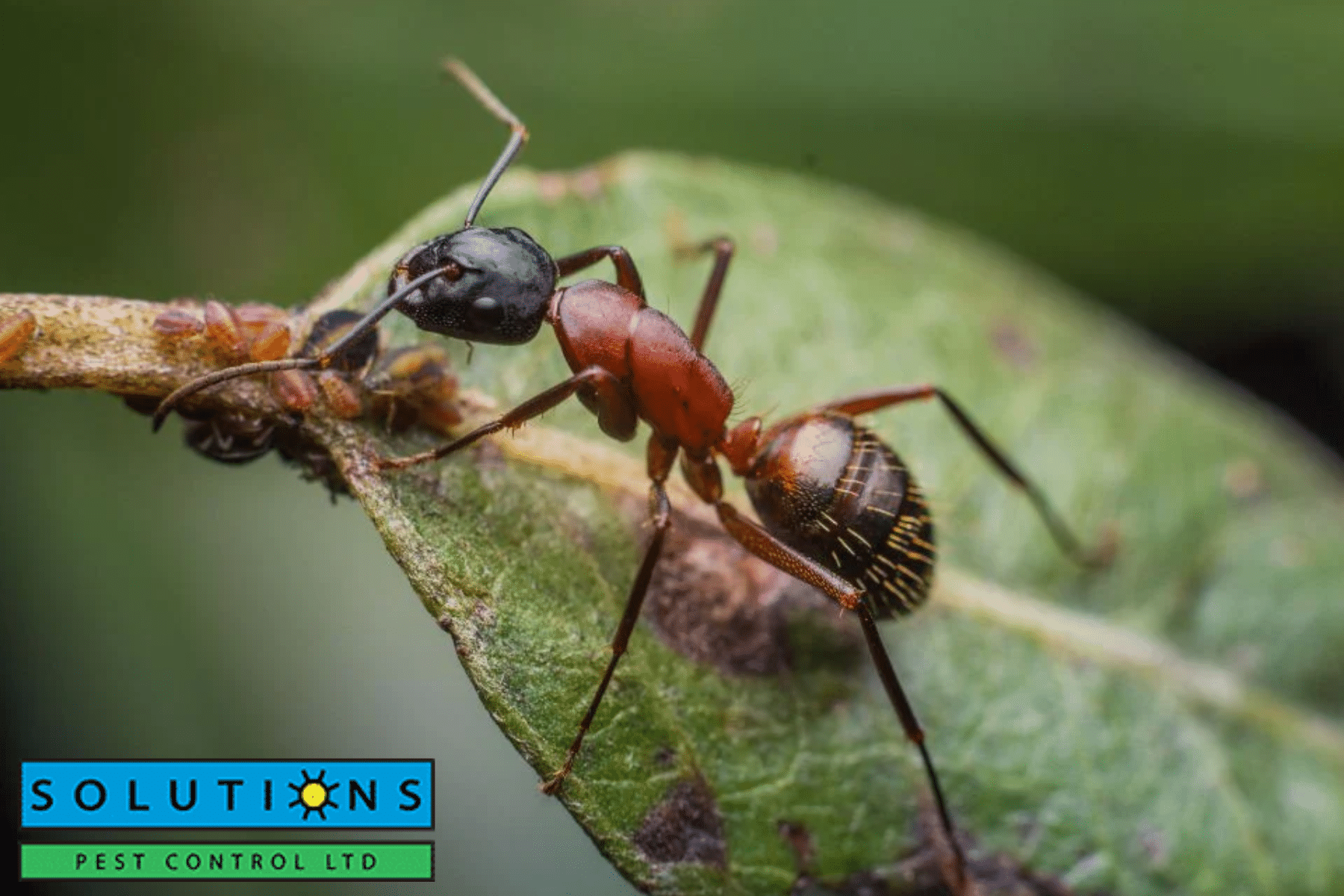
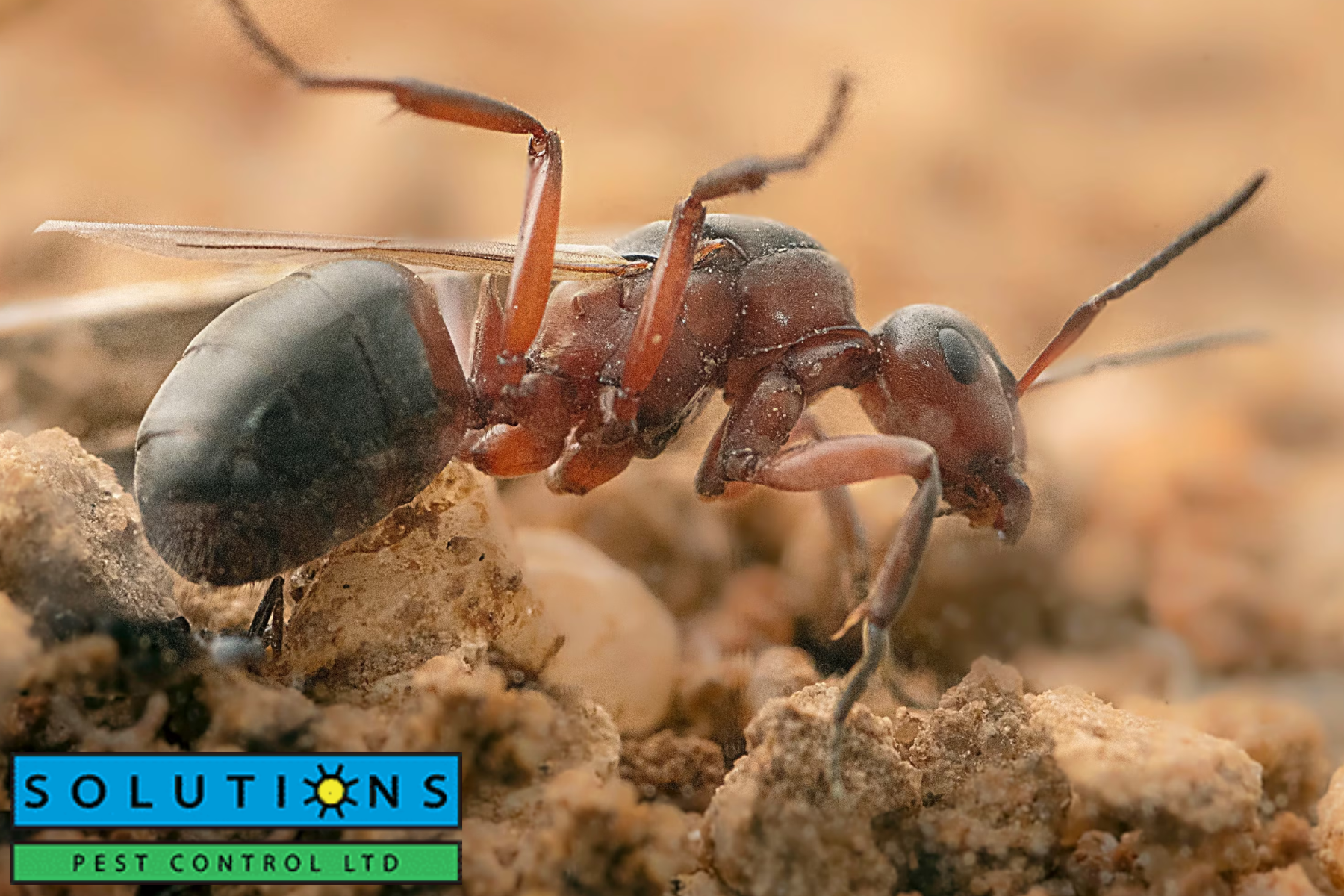
To understand why traditional sprays backfire, we have to look at how these tiny insects live. Pharaoh ants (Monomorium pharaonis) do not behave like the typical pavement ants you might see on a driveway. They are highly complex, resilient, and uniquely adapted to indoor environments.
The Multi-Queen Structure
Most common colonies have a single queen. If you eliminate that queen, the colony eventually collapses. Pharaoh ants, however, practice polygyny, meaning a single colony can contain dozens or even hundreds of reproductive queens.
Because the queens share reproductive duties, the colony does not rely on a single central nest. Instead, they operate from interconnected satellite nests hidden behind drywall, inside electrical outlets, under flooring, and near hot-water pipes.
What is Budding?
When you spray a standard over-the-counter insecticide for ant control, you are likely using a synthetic pyrethroid. These chemicals are highly repellent. While they do kill the handful of foraging ones on contact, the remaining colony members detect the chemical vapor instantly.
Instead of retreating or dying off, the colony enters emergency survival mode. The queens temporarily stop laying eggs, and the workers immediately divide the existing brood. They scatter in multiple directions, migrating deeper into the structure to escape the chemical. Within days, a single localized ant problem in a kitchen can escalate into five or six separate infestations in bathrooms, bedrooms, and utility closets.
Repellent Sprays vs. Non-Repellent Baits
Using the wrong product can turn a minor nuisance into a structural nightmare. The table below outlines how Pharaoh ants respond to different treatment types.
| Treatment Type | How Pests React | Impact on the Colony | Long-Term Success |
| Repellent Sprays (Pyrethroids, DIY aerosols) | Ants detect the chemical instantly, panic, and flee the area. | Triggers budding; multiplies the number of active nests. | Extremely Low. Makes the infestation significantly worse. |
| Non-Repellent Baits (Gels, borates, slow-acting agents) | Ants cannot detect the agent; they eat it and carry it home. | Destroys the colony from the inside out, including the queens. | Extremely High. This is the industry standard for eradication. |
How a Standard Spray Turns Into a Pest Disaster
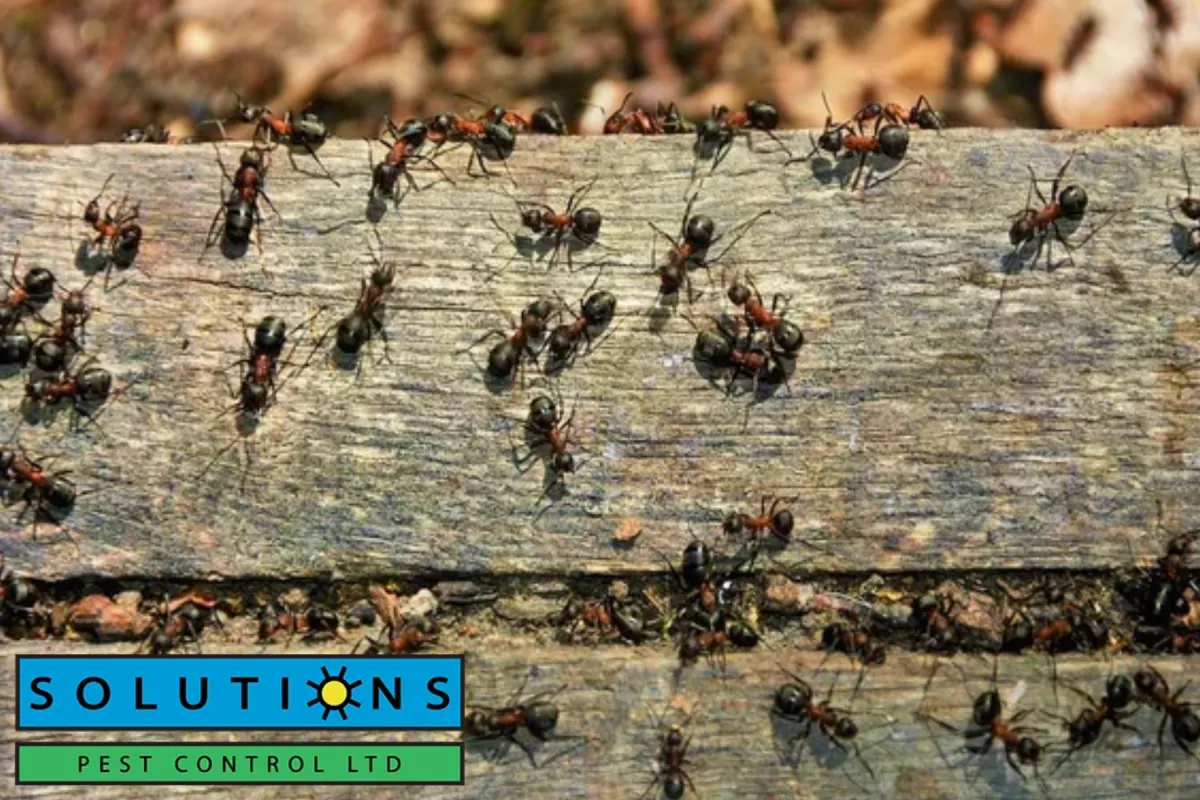
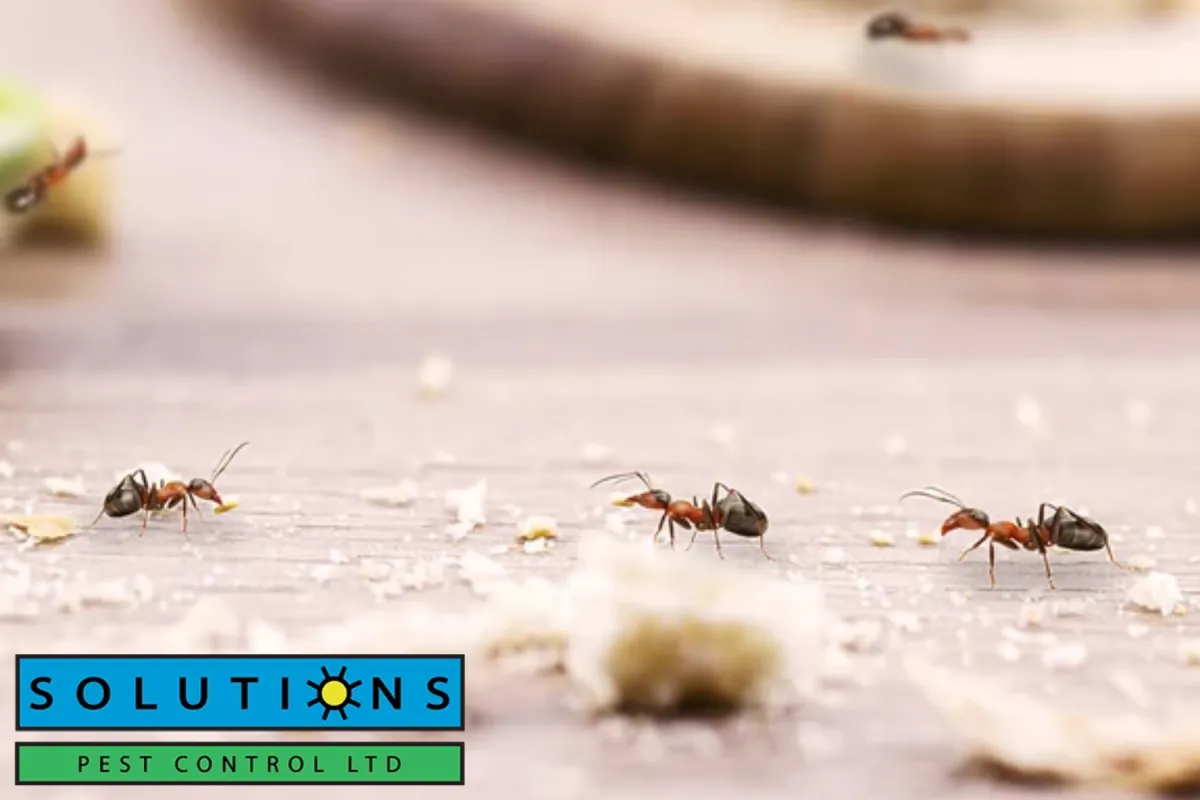
Property owners spot a line of tiny, amber-colored ants traveling along a kitchen baseboard and reach for a can of bug spray. Here is what happens next behind the scenes:
- The Apparent Success: The spray hits the line of ants. A few dozen foragers die instantly. The property owner cleans up the area, believing the issue is resolved.
- The Chemical Alarm: The chemical residue left behind emits a strong vapor that foraging ants recognize as danger. They release alarm pheromones to alert the rest of the nest.
- The Fracturing: Deep within the wall void, the colony splits. One queen moves upward toward the second-floor bathroom plumbing, while another moves laterally into the living room wall behind the television.
- The Resurgence: Two weeks later, the repellent spray begins to break down. Suddenly, ants emerge from multiple new areas of the property. The overall population has exploded because the multiple queens are now reproducing independently in separate nests.
During a recent audit for a property manager in a local apartment complex, we discovered that a tenant’s attempt to use store-bought sprays had driven a Pharaoh ant colony through an entire firewall into three neighboring units. This is where professional intervention becomes necessary.
Debunking the Myth: “If It Kills on Contact, It Must Be Working”
The biggest misconception in home management and pest control in Squamish is that a high immediate kill rate means a product is effective.
The Reality: For social insects like Pharaoh ants, killing them you can see ensures the survival of the ones you cannot see.
The visible ones crawling on your counters represent only about 5% to 10% of the total colony population. The remaining 90% stay safe inside the nest, caring for the queens and the larvae. When you use an instant-kill spray, you are merely cutting the leaf off a weed while watering the root. To eliminate Pharaoh ants, you must use a product that kills slowly enough to allow the workers to return to the nest and share the dose with the rest of the colony.
Our Multi-Tiered Protocol to Solve This
We do not rely on blind, heavy chemical spraying for Squamish pest control. Instead, we utilize a strict, five-part management system designed to work with insect biology to achieve total eradication without causing colony fragmentation.
1. Prevention
We begin by identifying moisture sources, structural gaps, and potential food attractants. Pharaoh ants love warmth and moisture, so we inspect around dishwashers, water heaters, and pipe penetrations to map out their trail networks without disturbing them.
2. Physical Control
Physical controls involve altering the environment to make it less hospitable. This includes sealing small cracks, fixing leaky pipes, and advising clients on proper food storage. By limiting their access to water, we force the ants to rely heavily on our targeted treatment zones.
3. Non-Chemical Products
Where appropriate, we use non-chemical tools, such as specialized dusts in drywall voids or physical traps, to monitor pest movement. These tools help us track the colony’s size and direction without triggering a defensive budding reaction.
4. Bait Systems
This is the core of our strategy. We deploy highly attractive, slow-acting bait systems that combine proteins and carbohydrates to match the colony’s changing dietary needs. Foraging ants mistake the bait for food, consume it, and carry it back to the hidden nests.
5. Chemical Products
If chemical products are required, we exclusively use advanced, undetectable, non-repellent formulas. The ants cannot smell or taste these products, meaning they walk right through treated zones without panic. Through a process called horizontal transfer, they pass the active ingredient to one another through grooming and feeding, systematically dismantling the colony from the inside out.
Technical Specs: Understanding the Pharaoh Ant
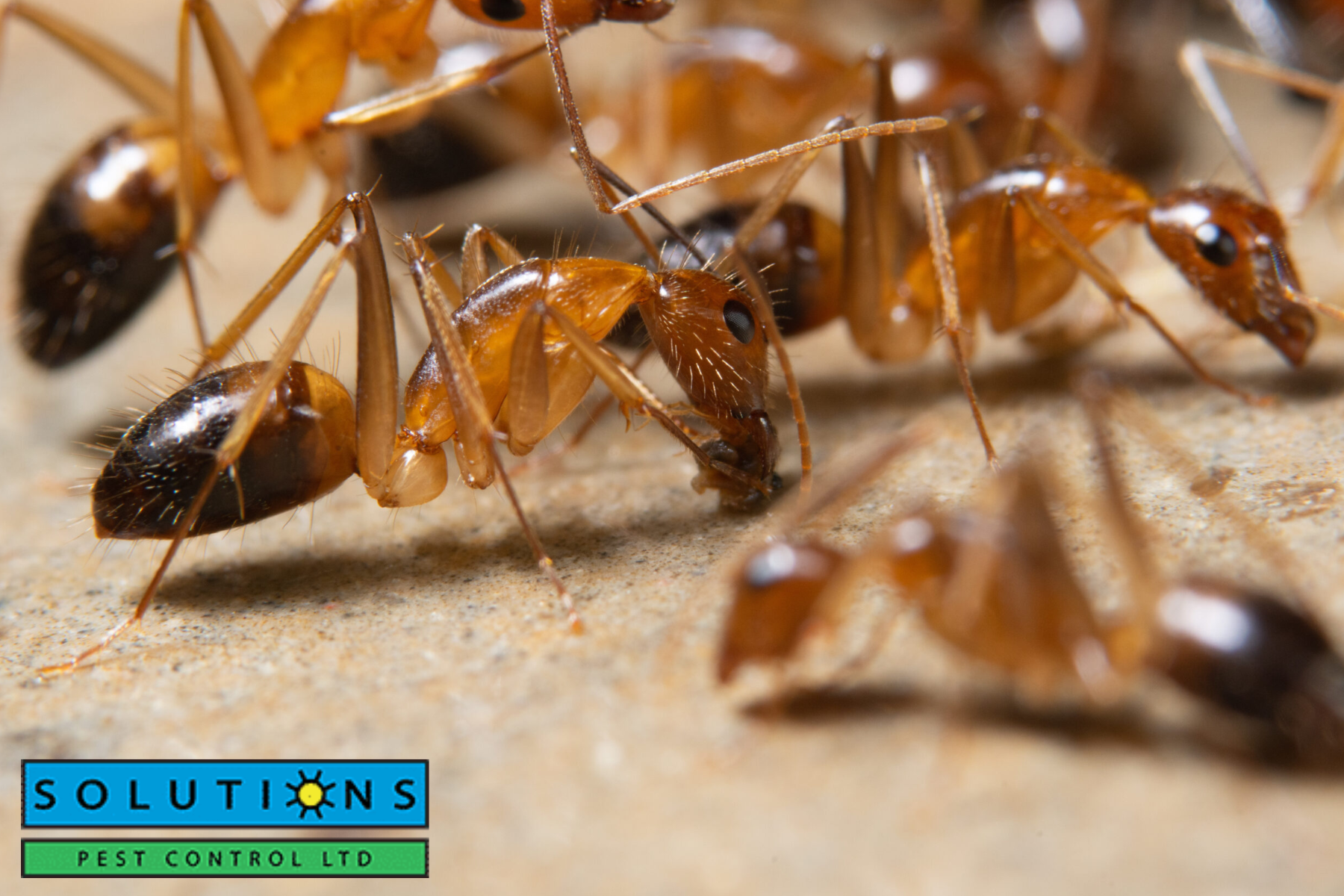
Pharaoh Ant (Monomorium pharaonis): A tiny species measuring roughly 1.5 to 2 millimeters in length, varying in color from light yellow to reddish-brown with a darker abdomen.
Budding Mechanism: A defensive reproductive habit where a colony fragments into multiple self-sufficient survival units in response to environmental stress, chemical repellents, or physical disruption.
Trophallaxis: The mutual exchange of regurgitated liquid food between social insects. This biological behavior is the mechanism that allows slow-acting baits to reach and eliminate the queens.
Non-Repellent Formula: A specialized class of pest management products that insects cannot detect, preventing defensive scattering behaviors and ensuring high transfer rates within a colony.
People Also Ask
Can I use vinegar or essential oils to get rid of Pharaoh ants?
No. While vinegar and essential oils are natural, they act as localized repellents. Just like chemical sprays, they disrupt established trails and cause the colony to split and bud into new areas of your home.
How long does it take to eliminate a Pharaoh ant colony with bait?
Because bait relies on the ants feeding one another naturally, it typically takes between 2 to 4 weeks to completely eliminate a colony. You may see a temporary increase in activity during the first few days as they flock to the bait stations.
Why do Pharaoh ants suddenly appear in bathrooms and kitchens?
They have a very high moisture requirement. They are commonly attracted to kitchens, bathrooms, and laundry rooms because they nest near leaking pipes, condensation lines, under sinks, and behind damp drywall.
Should I wipe away the ant trails if I see them?
If you are currently baiting, do not wipe away the trails or use household cleaners near the area. Wiping away the trails removes the pheromones that guide other ants to the bait, slowing the eradication process.
Take Control of Your Ant Problem Safely
Dealing with a complex ant infestation can feel overwhelming, but you do not have to handle it alone. Missteps with over-the-counter sprays prolong the issue, leading to higher costs and added stress.
Whether you need residential assistance or commercial service, Solutions Pest Control is here to help. We are a professional and reliable company committed to providing effective, tailored solutions for each customer. Our goal is to be the trusted experts that residents and business owners turn to for pest management.
Our core belief is delivering high-quality, environmentally friendly solutions. Customer satisfaction is at the heart of our approach, and we strive to ensure each home and business remains pest-free while minimizing environmental impact. We stand out by offering eco-friendly pest control services in Squamish, BC tailored to each client’s needs. Our team’s wealth of experience and commitment to customer satisfaction ensure guaranteed results, setting us apart from the competition in Vancouver and the surrounding areas.
We aim to make our customers feel confident and secure. When engaging with our content, you should feel reassured that your pest problems will be resolved swiftly and professionally by an experienced team. If you are struggling with recurring pests and want to learn more about our specialized methods, let us provide the lasting solution and peace of mind you deserve.
We encourage readers to reach out to us today for a consultation or a personalized quote on our comprehensive solution. Additionally, we invite you to follow us on social media for the latest updates and helpful tips!