


Not all wasp nests are the same. A paper wasp nest hanging under your eaves is very different from an underground yellowjacket colony in your lawn. A bald-faced hornet nest in a cedar tree also needs a different approach from the small mud tubes built by solitary mud daubers in your garage.
Identifying the type of wasp nest is the first step toward choosing the right response. Some nests may be safe to leave alone, while others can pose a serious sting risk if disturbed.
For homeowners looking for pest control in Vancouver, understanding where wasps nest, how their colonies behave, and when to call a professional can help prevent painful encounters. Here are five common wasp nest types found in BC, where to look for them, and what to do if you find one.
Five Common Wasp Nest Types in BC
The most common types of wasp nests differ in shape, location, and risk level:
- Paper wasp nests: Open, umbrella-shaped nests found under eaves, deck railings, and porch ceilings.
- Aerial yellowjacket nests: Enclosed, papery nests found in shrubs, trees, and other sheltered outdoor areas.
- Underground yellowjacket nests: Hidden colonies that often use old rodent burrows or holes in the soil.
- Bald-faced hornet nests: Large, enclosed, gray nests that hang from trees, shrubs, or buildings.
- Mud dauber nests: Small clay or mud tubes built in sheltered, dry areas such as garages and outbuildings.
The risk depends on the species, colony size, nest location, and how close people are likely to get to it. If you cannot identify a nest safely from a distance, avoid disturbing it and contact a pest control professional.
Paper Wasp Nests: What They Look Like and What to Do
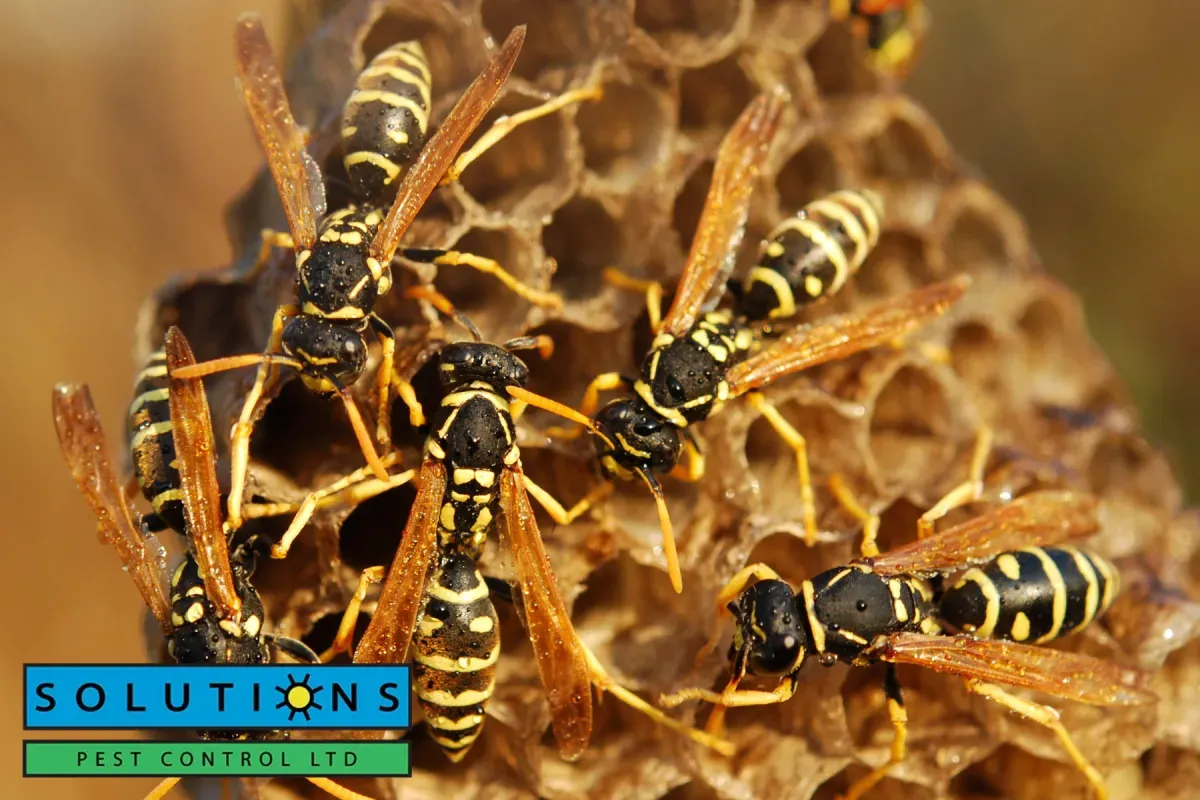
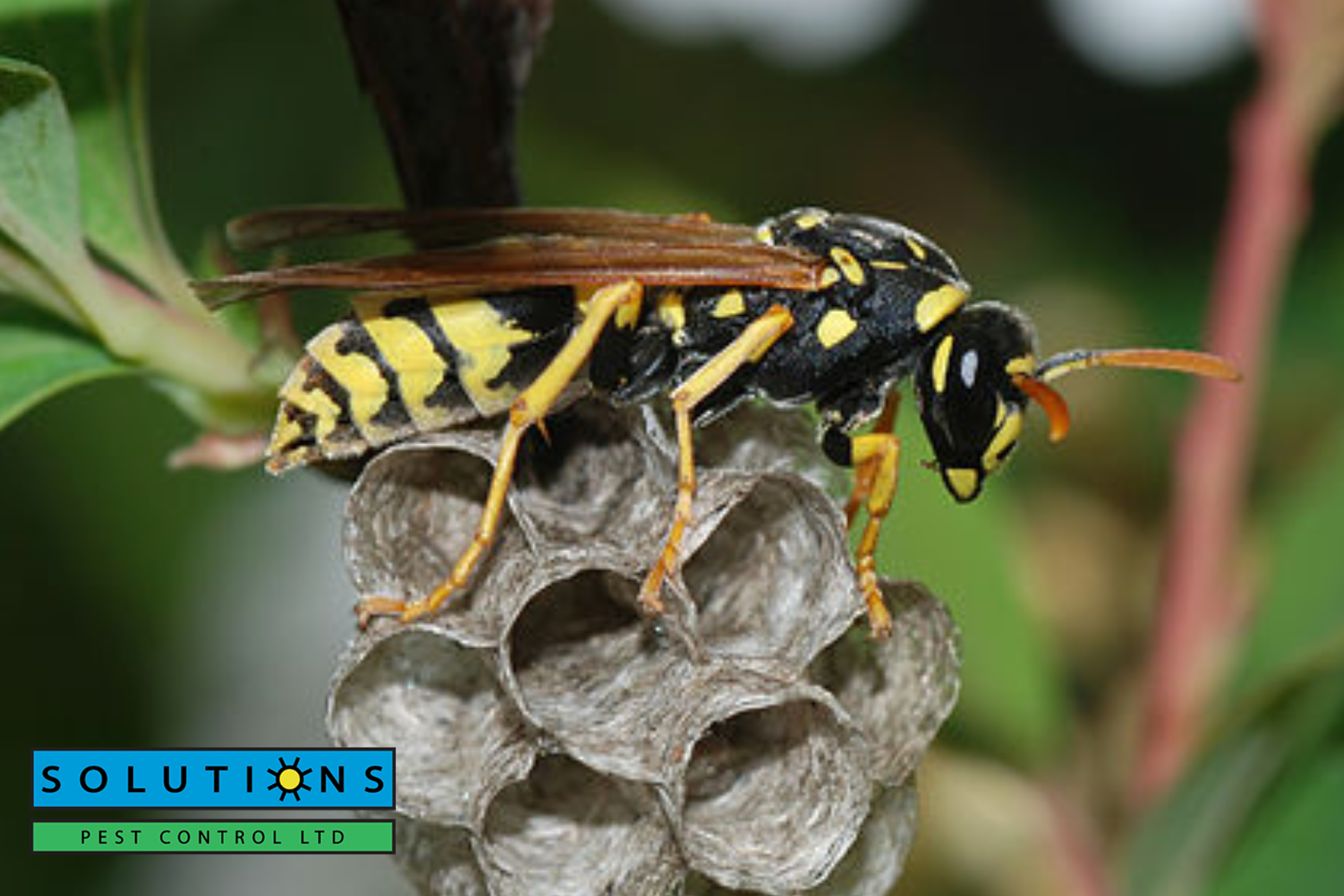
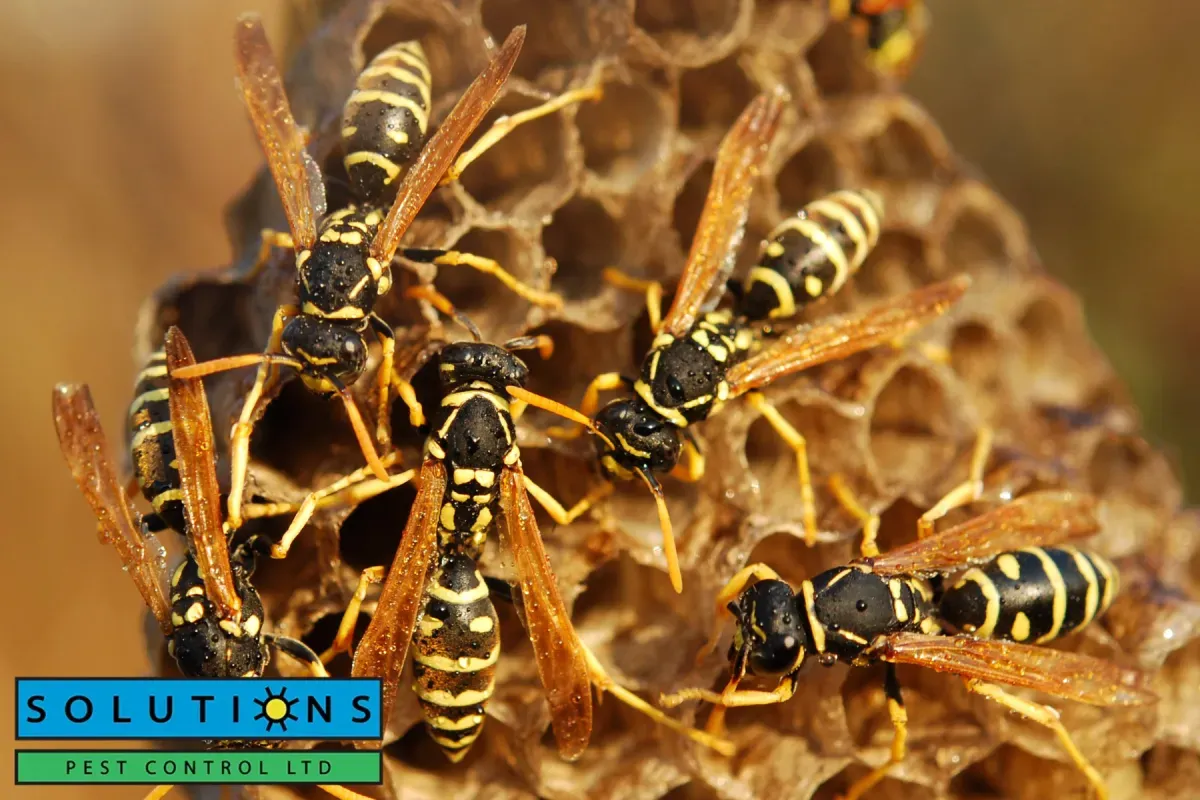
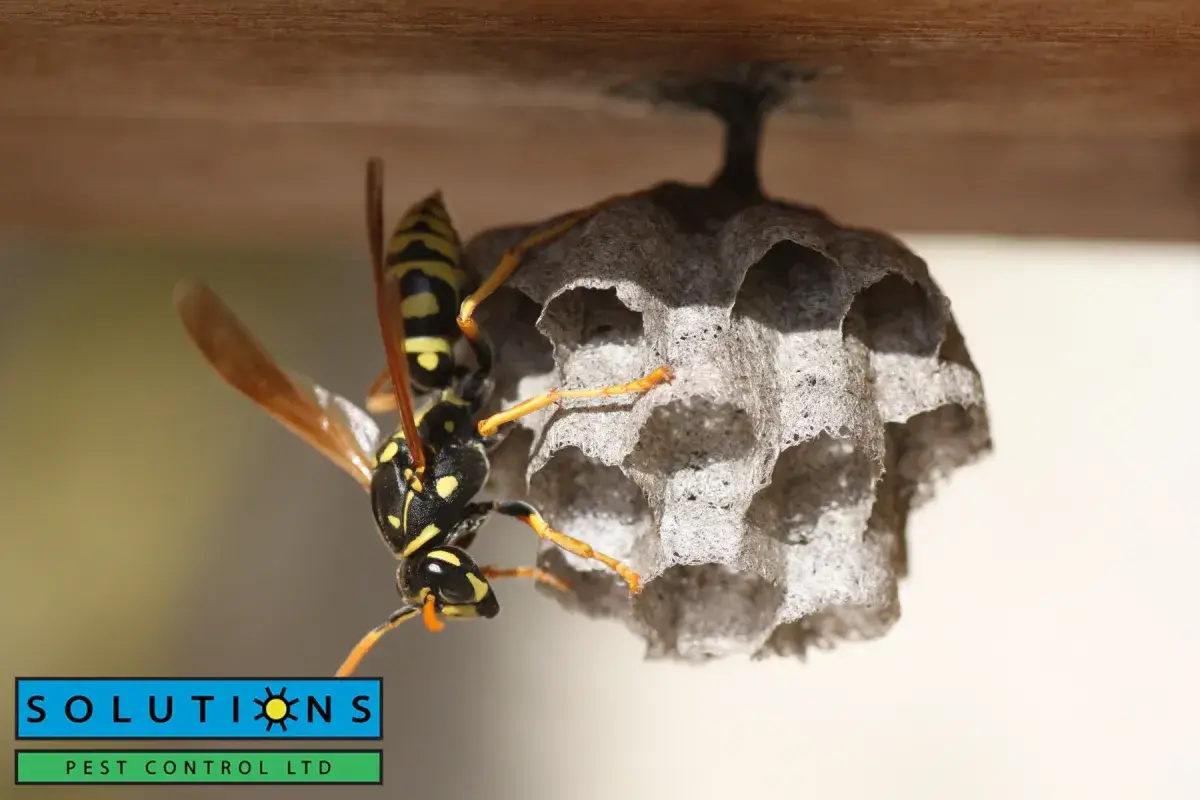
Paper wasp nests are easy to recognize once you know what to look for. They have an open, umbrella-like shape with rows of visible hexagonal cells hanging from a narrow stalk. Paper wasps build these nests from chewed wood fibers mixed with saliva, creating a thin, papery material.
You may find a nest under deck railings, porch ceilings, roof eaves, picnic tables, or inside open sheds and garages. Paper wasps often choose sheltered spots that protect their nests from rain.
What should you do if you find a paper wasp nest?
Start by keeping your distance and checking whether the nest is near a doorway, walkway, patio, or children’s play area. Even a small colony can sting if it feels threatened.
Although some small, exposed nests may appear easy to remove, DIY treatment can still lead to stings. Avoid approaching or knocking down an occupied nest, especially if you have a known sting allergy or cannot reach it safely. A professional can assess the nest and recommend an appropriate treatment.
Paper wasps generally build new nests each spring rather than reusing old ones. An abandoned nest from the previous season is usually inactive, but make sure no wasps are entering or leaving before approaching it.
Yellowjacket Nests in Wall Voids and Eaves
Yellowjackets can build nests inside wall cavities, roof soffits, and other enclosed spaces. They enter through small gaps in exterior siding, cracks, construction joints, or openings around pipes and electrical lines.
Unlike an exposed nest, a colony inside a wall may be difficult to see. One of the clearest warning signs is a steady stream of wasps entering and leaving the same small opening.
Why are wall-nesting yellowjackets difficult to remove?
The nest is hidden inside the structure, so treating the visible entry point alone may not reach the colony. Disturbing the opening or sealing it before the nest has been treated can cause wasps to find other ways out, potentially into the home.
If you suspect a nest inside your wall or eaves, do not plug the opening or attempt to treat the cavity yourself. A pest control professional can assess the entry point, determine the likely nest location, and choose a suitable treatment method.
For homeowners seeking Vancouver pest control, professional help is especially important when wasps are entering a living space or nesting close to frequently used areas.
Underground Yellowjacket Nests: A Serious Sting Risk
Underground yellowjacket nests can be difficult to spot because the entrance may look like an ordinary hole in the lawn. Colonies often develop in abandoned rodent burrows or other openings in the soil.
The danger increases when someone accidentally disturbs the nest while mowing, gardening, digging, or walking near the entrance. A colony that has grown throughout the summer may contain many workers ready to defend the nest.
Late summer and early fall can be particularly challenging because yellowjacket activity around outdoor food and garbage often becomes more noticeable.
How can you identify an underground yellowjacket nest?
Look for a steady stream of yellowjackets entering and leaving a hole at ground level. You may notice repeated flight paths near lawn edges, garden beds, sheds, or areas with disturbed soil.
Never pour boiling water into a suspected nest, block its entrance, or spray directly into the hole. These actions can trigger a defensive response and expose you to multiple stings.
Keep people and pets away from the area and contact a professional. Underground colonies require careful assessment and treatment because the nest itself is usually hidden from view.
Bald-Faced Hornet Nests
Bald-faced hornets build large, enclosed nests from a papery material made of chewed wood fibers. These nests are usually gray and may resemble a football or a basketball as the colony grows. They can hang from tree branches, large shrubs, or building overhangs.
Bald-faced hornets are mostly black and white, unlike the familiar yellow-and-black markings of yellowjackets. Their nests usually have a small entrance near the bottom.
These colonies can become more defensive when disturbed, and the hornets can sting more than once. A nest near a front door, walkway, deck, or children’s play area deserves particular attention.
Should you remove a bald-faced hornet nest yourself?
Professional removal is the safer choice, especially when the nest is large, elevated, or close to people. Avoid shaking branches, throwing objects at the nest, or trying to knock it down.
If the nest is high in a tree and far from people, a professional can help you decide whether removal is necessary or whether leaving it undisturbed is a reasonable option. Colonies generally die off as cold weather sets in, although the timing varies with local conditions.
Mud Dauber Nests: Small Clay Tubes in Sheltered Areas
Mud daubers are solitary wasps that build small nests from mud or clay. Their nests often look like narrow tubes or clusters of short, hardened mud cells attached to walls, rafters, window frames, or other sheltered surfaces.
Unlike social yellowjackets and hornets, mud daubers do not form large colonies. Females build individual nests and stock them with spiders to feed their developing young.
Mud daubers are generally less defensive than social wasps and are unlikely to sting unless handled or threatened. Their nests are usually more of a nuisance than a major safety concern.
What should you do about mud dauber nests?
If the nest is inactive and easy to reach, removal may be a simple maintenance task. However, avoid handling a nest if you are unsure which species built it or whether it is occupied. You can also leave an inactive nest alone if it is not causing a problem.
If you keep finding new nests in a garage or shed, inspect the area for sheltered nesting spots and consider blocking suitable access points after confirming the nest is no longer active.
When Should You Call a Professional for Wasp Nest Removal?
Professional wasp nest removal is recommended when a nest is hidden, difficult to reach, large, or located near people and pets.
Contact a pest control professional if:
- The nest is underground or inside a wall cavity.
- Wasps are entering your home through a gap in the siding, soffit, or roof.
- A bald-faced hornet nest is close to a doorway, walkway, deck, or play area.
- The colony is large, or wasps react aggressively when you approach.
- You cannot confidently identify the species or nest type.
- Someone on the property has a known allergy to stings.
A small, visible nest may look easy to handle, but its location and the behavior of the colony can make removal dangerous. Do not attempt to treat a nest by sealing its entrance, burning it, striking it, or pouring liquids into it.
If you need wasp nest removal, a trained technician can identify the likely species, assess the risks, and recommend a suitable treatment plan.
For homeowners who need pest control in Vancouver, BC, professional service can help address active nests while reducing the risk of stings and repeat problems.
Frequently Asked Questions
How do I find a hidden wasp nest?
Watch for repeated wasp activity from a safe distance. Wasps entering and leaving the same gap in a wall, soffit, or roofline may indicate a hidden nest. A steady flight path toward a hole in the lawn may point to an underground colony. Do not follow wasps closely or disturb a suspected nest. A pest control professional can help locate the source safely.
Can wasps nest inside house walls?
Yes. Yellowjackets can build nests inside wall cavities, soffits, and attic spaces by entering through small openings in the exterior of a building. You may notice wasps repeatedly entering and leaving one spot. Do not seal the opening before the colony has been treated, as this can cause wasps to seek other routes into the home.
What time of year are wasp nests most dangerous?
Late summer and early fall can bring increased risks because social wasp colonies have had months to grow. Yellowjackets may also become more noticeable around outdoor meals, garbage, and other food sources. Underground nests can be especially dangerous when disturbed during lawn care or gardening. Avoid active nests and arrange professional help when needed.
Do wasps reuse old nests?
Most social wasps, including paper wasps and yellowjackets, do not reuse the previous year’s nest. New queens typically start new colonies in spring, and the old colony dies off as the season ends. An abandoned nest may remain attached to a building or tree through winter, but confirm that it is inactive before attempting to remove it.
How long does wasp nest removal take?
The time required depends on the nest’s location, size, species, and accessibility. An exposed nest may be quicker to treat than a colony hidden inside a wall or underground. A technician must also consider the risk of disturbing the colony and whether additional checks are needed. Your pest control provider can give you a more accurate estimate after assessing the situation.
Get Help With Wasp Nests in Metro Vancouver
Finding a wasp nest near your home does not always mean it needs immediate removal, but disturbing an active colony can put you at risk. Identifying the nest type and understanding its location will help you choose the safest next step.
From paper wasp nests under eaves to hidden yellowjacket colonies underground, Solutions Pest Control can help make the removal process safer and more manageable. If you are unsure what kind of nest you have, keep your distance and contact our team for a professional assessment.
For reliable pest control in Vancouver, contact us today to discuss your concerns and determine whether treatment is needed.